
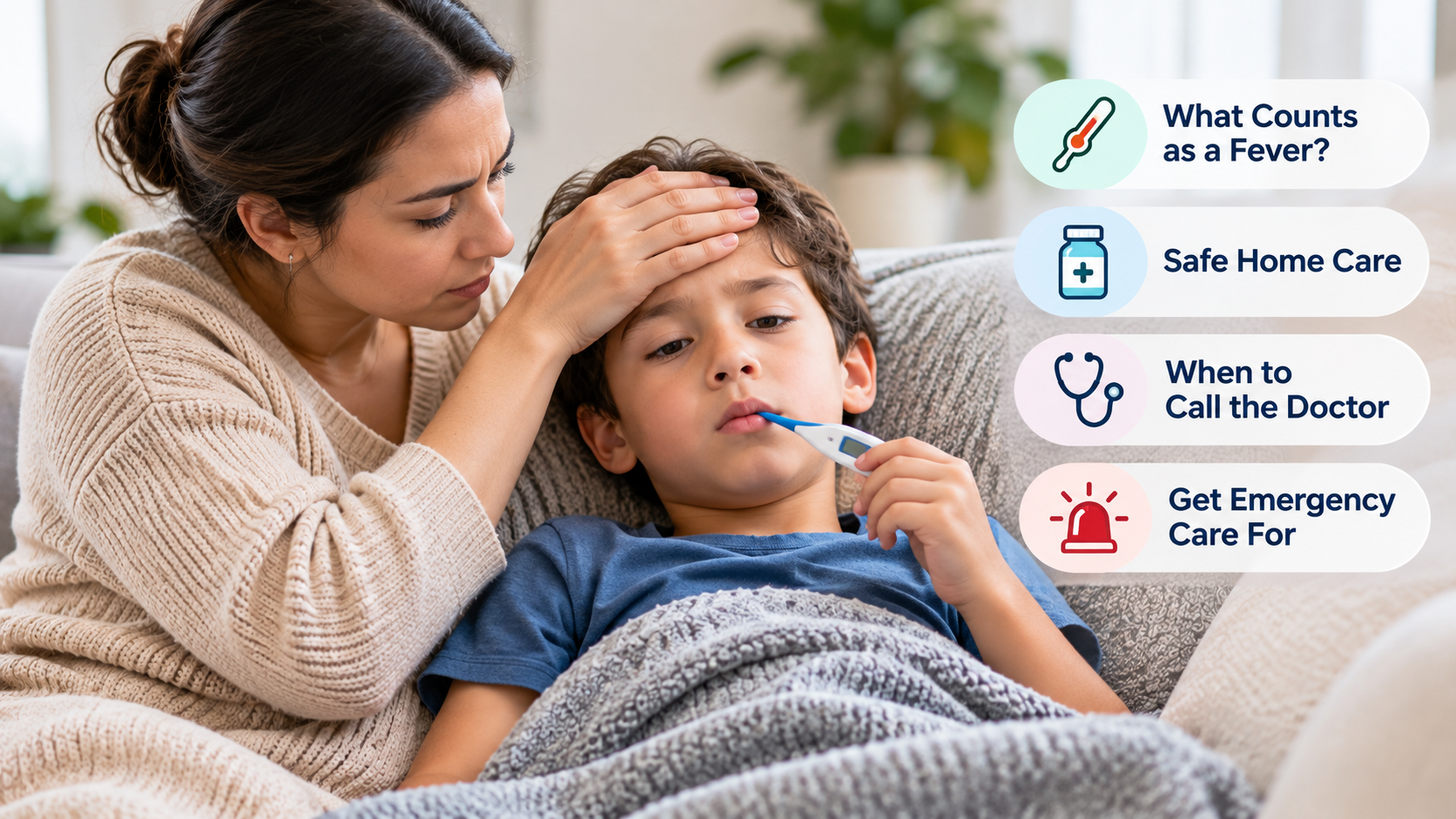
Fever Is a Symptom, Not the Illness
Parents often call us worried about a number on the thermometer. We understand — a high reading is scary. But a fever is the immune system doing its job. The more useful questions are: Is the person drinking? Are they alert when the fever comes down? Is anything else worrying, like trouble breathing or a stiff neck?
How to Take an Accurate Temperature
Different thermometers work better for different ages. Choosing the right method can help you get a more reliable reading.
Rectal Thermometer
- Best for: Babies under 3 months.
- Accuracy: Most accurate for infants.
Oral Thermometer
- Best for: Children ages 4 and up, and adults.
- Important: Wait at least 15 minutes after eating or drinking before measuring.
Forehead (Temporal) Thermometer
- Best for: Screening at all ages.
- Important: Confirm a borderline reading using another appropriate method.
Ear Thermometer
- Best for: Children over 6 months and adults.
- Important: Earwax or incorrect placement can affect accuracy.
Underarm Thermometer
- Best for: Quick temperature screening.
- Important: Generally less accurate than other methods.
Safe Home Care
Most mild fevers can be managed at home with appropriate care and monitoring.
- Stay hydrated: Offer plenty of fluids, including water, broth, oral rehydration drinks, or popsicles.
- Wear comfortable clothing: Dress in light clothing and avoid excessive bundling.
- Get adequate rest: Allow time for recovery. There is no need to wake a sleeping child solely to give fever medicine.
- Use fever reducers appropriately: Acetaminophen or ibuprofen may help improve comfort. For children, follow weight-based dosing instructions and use the measuring device provided with the medicine.
- Check medication safety: Ask a pharmacist or healthcare provider if you are unsure about the correct dose. Ibuprofen is not recommended for babies under 6 months unless advised by a doctor.
- Avoid aspirin in children: Never give aspirin to anyone under 18 because of the risk of Reye's syndrome.
When to Call the Doctor
Some fevers require medical evaluation, especially when symptoms persist or other warning signs develop.
Adults
Contact your healthcare provider if you experience:
- A fever of 103°F (39.4°C) or higher.
- Fever lasting longer than three days.
- Fever accompanied by a new rash, painful urination, ear pain, or a cough with colored mucus.
- Any fever while undergoing chemotherapy or living with a weakened immune system.
Children
Contact a healthcare provider if your child has:
- A fever between the ages of 3 and 6 months.
- Fever lasting more than two to three days.
- Fewer wet diapers or less urination than usual.
- Unusual fussiness or sleepiness that does not improve when the fever comes down.
Go to the ER or Call 911 For
Seek emergency medical attention for:
- Infants under 3 months: A temperature of 100.4°F (38°C) or higher requires immediate medical evaluation.
- Breathing difficulties: Trouble breathing or bluish lips.
- Neurological symptoms: A stiff neck, severe headache, confusion, or a seizure.
- Concerning rash: A rash that does not fade when pressed.
- Severe dehydration: No urination for eight or more hours, no tears, or a very dry mouth.
These symptoms may indicate a serious condition requiring urgent medical care.
Frequently Asked Questions
Should I bring a fever down right away?
Not necessarily. Fever-reducing medicines are generally used to improve comfort. Lowering a fever does not make the underlying infection disappear faster.
Is a fever dangerous for the brain?
Ordinary fevers caused by infections generally do not cause brain damage. Extremely high body temperatures caused by heatstroke are different and require emergency medical attention.
Can my child go to school?
Many schools require children to be fever-free for at least 24 hours without fever-reducing medication before returning. Follow your school's specific health policies.
Same-Day Care When a Fever Won't Quit
Worried about a fever that is not improving? Aspire Medical Group provides medical care for patients in Cumming, Georgia, and surrounding communities.
Visit Aspire Medical Group to learn more about available services or call (770) 764-1234 to request an appointment.
This article is for educational purposes and does not replace professional medical advice, diagnosis, or treatment.