
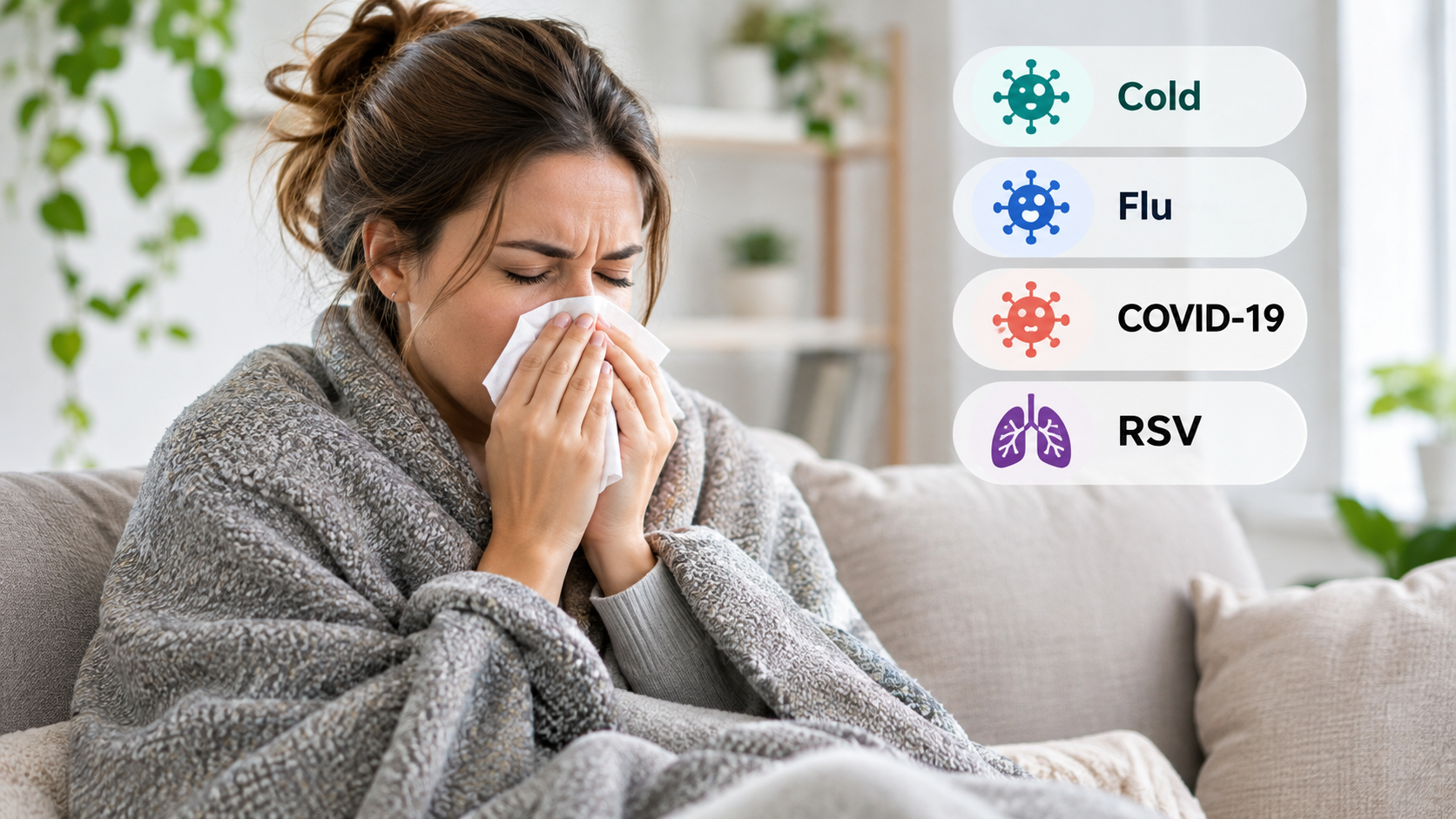
Is This Just a Cold?
It's the question we hear most from November through February. Respiratory viruses overlap so much that even physicians can't reliably tell them apart by symptoms alone. What we can do is look at the pattern, check your risk factors, and test when the result would change your treatment.
Symptoms Side by Side
Cold, flu, COVID-19, and RSV can cause similar symptoms, but certain patterns may help you understand the differences. Symptoms alone cannot reliably confirm which virus you have.
Common Cold
- Onset: Usually gradual.
- Fever: Rare or mild.
- Body aches: Usually mild.
- Fatigue: Generally mild.
- Runny or stuffy nose: Common.
- Sore throat: Common.
- Cough: Usually mild.
- Loss of taste or smell: Rare.
Influenza (Flu)
- Onset: Often sudden.
- Fever: Common and sometimes high.
- Body aches: Common and often severe.
- Fatigue: Common and may last for weeks.
- Runny or stuffy nose: Sometimes.
- Sore throat: Sometimes.
- Cough: Common, often dry.
- Loss of taste or smell: Rare.
COVID-19
- Onset: Can be gradual or sudden.
- Fever: Common.
- Body aches: Common.
- Fatigue: Common.
- Runny or stuffy nose: Sometimes.
- Sore throat: Common.
- Cough: Common.
- Loss of taste or smell: Possible.
Respiratory Syncytial Virus (RSV)
- Onset: Usually gradual.
- Fever: Sometimes.
- Body aches: Usually mild.
- Fatigue: Common.
- Runny or stuffy nose: Common.
- Sore throat: Sometimes.
- Cough: Common and may include wheezing.
- Loss of taste or smell: Rare.
Symptoms can vary depending on age, overall health, and the severity of infection. Testing and medical evaluation may be needed to identify the cause and determine appropriate treatment.
When Testing Makes Sense
We recommend testing if you have a fever, body aches or a cough and you:
- Are 65 or older, pregnant, or have asthma, diabetes, heart, lung or kidney disease.
- Live with an infant, older adult or someone with a weakened immune system.
- Became sick within the last two days, when antivirals work best.
- Need to know whether you can return to work or school.
At Aspire Medical Group, we offer same-day visits for respiratory symptoms. Your healthcare provider can determine whether testing is appropriate based on your symptoms and medical history.
Who's at Higher Risk of Complications
Adults 65 and older, young children, pregnant people, and anyone with chronic conditions such as asthma, COPD, diabetes, heart disease or obesity are more likely to develop pneumonia or need hospital care.
If you're in one of these groups, don't wait it out — contact your healthcare provider early for guidance and appropriate treatment.
Get Emergency Care For
Seek immediate medical attention if you experience:
- Trouble breathing or shortness of breath.
- Chest pain or pressure.
- Confusion or difficulty waking.
- Bluish lips or face.
- Symptoms that improve, then return with a worse fever and cough.
- Not urinating, or signs of severe dehydration.
These symptoms may indicate a serious complication that requires urgent medical evaluation.
Prevention Still Works
Seasonal flu vaccination remains an important way to reduce the risk of influenza and its complications. The CDC recommends annual flu vaccination for most people aged 6 months and older.
Other everyday preventive measures include:
- Wash your hands regularly: Use soap and water or an alcohol-based hand sanitizer.
- Stay home when sick: Avoid close contact with others while experiencing respiratory symptoms.
- Cover coughs and sneezes: Use a tissue or your elbow to reduce the spread of germs.
- Maintain good hygiene: Clean frequently touched surfaces and avoid touching your face with unwashed hands.
- Stay up to date with vaccinations: Ask your healthcare provider which flu, COVID-19, and RSV vaccines are recommended for your age and health conditions.
Taking preventive steps can help protect you and those around you, especially people at higher risk of complications.
Frequently Asked Questions
Can I have flu and COVID at the same time?
Yes, co-infection is possible. A combined test can check for both influenza and COVID-19.
How long should a cold last?
Most colds improve within 7–10 days. If symptoms persist, worsen, or improve and then return, consult your healthcare provider.
Can I be seen by telemedicine?
Often, yes. Telemedicine works well for many mild respiratory illnesses, although testing or a physical examination may require an in-person visit.
Same-Day Sick Visits in Cumming
If you live in Cumming, Forsyth County, Alpharetta, Johns Creek or Suwanee, Aspire Medical Group provides medical care for patients experiencing cold, flu, COVID-19, and other respiratory symptoms.
Visit Aspire Medical Group to learn more about our primary care and acute illness services, or call (770) 764-1234 to request an appointment.
This article is for educational purposes and does not replace professional medical advice, diagnosis, or treatment.