
How Many Sessions Does Laser Tattoo Removal Take? An Honest Guide From Our Laser Team
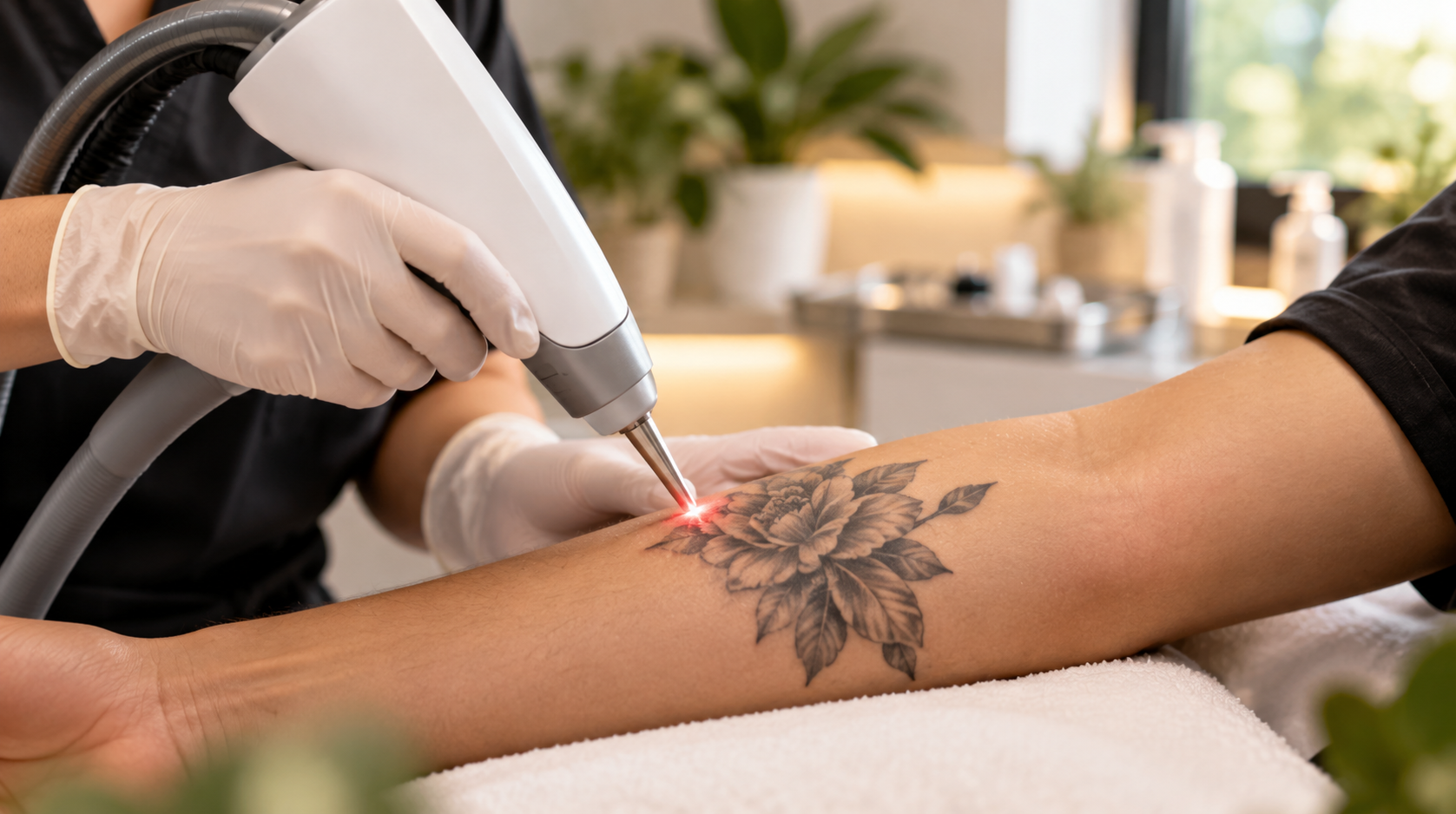
If you're considering laser tattoo removal, one of the first questions you probably have is: How many sessions will it take?
The answer depends on several factors, including the tattoo's size, ink colors, age, location, and depth, as well as your skin characteristics and how your body responds to treatment. Many professional tattoos require multiple sessions, and complete removal cannot always be guaranteed.
At Aspire Medical Group in Cumming, Georgia, our laser team helps patients understand the treatment process, set realistic expectations, and explore options based on their individual goals.
In this guide, we'll explain how laser tattoo removal works, what affects the number of sessions, how far apart treatments are typically scheduled, and what to expect during recovery.
Key Takeaways
- Many professional tattoos require approximately 6–12 or more laser tattoo removal sessions, depending on individual circumstances.
- Treatments are commonly spaced about 6–8 weeks apart, although your provider may recommend a different interval.
- Black and dark blue inks often respond more readily than certain lighter or more resistant colors.
- Your skin needs time to heal, and your body gradually clears fragmented ink between sessions.
- Complete removal is not guaranteed, and some tattoos may retain faint pigment or a shadow.
- A consultation helps determine a realistic treatment plan based on your tattoo and skin characteristics.
How Does Laser Tattoo Removal Work?
Laser tattoo removal uses short pulses of concentrated light to break tattoo pigment into smaller particles. The body's immune system then gradually processes and clears these particles over time.
Because this process happens between appointments, tattoo removal is not usually completed in a single visit. Each treatment targets remaining pigment, and the tattoo gradually fades over successive sessions.
Different inks absorb laser energy differently. Tattoo depth, pigment density, previous treatments, and the characteristics of your skin can also influence how the tattoo responds.
The goal may be complete removal or enough fading to make a cover-up tattoo possible. Your treatment plan should reflect your preferred outcome and what is realistically achievable.
How Many Laser Tattoo Removal Sessions Do You Need?
Many professional tattoos require around 6–12 sessions, although some need fewer and others require considerably more. There is no single session count that applies to everyone.
| Tattoo characteristic | How it may affect treatment |
|---|---|
| Small, uncomplicated tattoo | May require fewer sessions than a large, dense tattoo |
| Black or dark blue ink | Often responds more readily to appropriate laser treatment |
| Certain green, light blue, yellow, or other resistant pigments | May require additional treatment, and some colors are difficult to remove |
| Dense professional tattoo | May need more sessions because of pigment concentration |
| Cover-up or layered tattoo | May require additional sessions because of overlapping ink |
| Tattoo on the hands, ankles, or feet | May fade more slowly than tattoos in some other locations |
| Existing scarring or skin concerns | May affect treatment planning and safety considerations |
These are general patterns, not guarantees. An in-person assessment is the best way to estimate your likely treatment course.
What Affects the Number of Sessions?
1. Ink Color and Type
Different tattoo pigments respond differently to laser wavelengths. Black ink is often among the easiest pigments to target, while some green, blue, yellow, and other colors may be more challenging.
A multicolored tattoo may require a different approach for different pigments. Some colors may fade substantially while others remain visible.
2. Tattoo Size and Ink Density
Larger tattoos generally require more treatment time because there is more pigment to address. A densely packed professional tattoo may also need more sessions than a small tattoo with relatively light pigment.
Your provider will consider the tattoo's size, ink distribution, and overall complexity when developing a treatment plan.
3. Tattoo Age and Application
Older tattoos may have faded naturally over time, potentially making them easier to treat in some cases. However, age alone does not determine how quickly a tattoo will respond.
Professional tattoos can contain densely packed pigment, while amateur tattoos vary considerably in depth and ink distribution. Neither category guarantees a particular result.
4. Tattoo Location
Blood flow, lymphatic activity, and other local factors can influence how the body clears fragmented pigment. Tattoos on the hands, ankles, and feet may fade more slowly than tattoos in some other locations.
The location also matters when planning treatment and protecting the surrounding skin.
5. Skin Tone and Individual Skin Characteristics
Skin tone is an important safety consideration because laser energy can interact with natural skin pigment as well as tattoo ink.
Appropriate laser selection, settings, and clinical assessment help reduce the risk of unwanted pigment changes and other complications. People with darker skin tones may require particularly careful treatment planning.
Your provider should assess your skin characteristics before deciding which laser approach is appropriate.
6. Your Body's Response to Treatment
The laser breaks pigment into smaller particles, but your body must gradually clear them. Individual responses vary, and smoking, circulation, immune function, and other factors may influence healing and fading.
Following aftercare instructions and allowing adequate time between treatments helps support the healing process.
How Far Apart Should Tattoo Removal Sessions Be?
Laser tattoo removal sessions are commonly scheduled about 6–8 weeks apart, although the appropriate interval depends on the treatment area, your skin's recovery, and your provider's recommendations.
Waiting between sessions gives the skin time to heal and allows the body to clear fragmented ink. Treating too frequently does not necessarily accelerate fading and may increase the risk of irritation or complications.
Your provider may recommend a longer interval if the area needs more time to recover.
Why Patience Matters
Tattoo removal is a gradual process. Redness, swelling, and temporary changes in the treated area can occur after a session, while visible fading develops over time.
Avoid judging the final result immediately after treatment. Your provider can help you understand when to assess progress and when another session may be appropriate.
What Does Laser Tattoo Removal Feel Like?
People often describe the sensation as a series of quick snaps against the skin, sometimes compared to a rubber band. The level of discomfort varies with tattoo location, size, treatment settings, and individual sensitivity.
Depending on the treatment and clinical assessment, cooling methods or other comfort measures may be used.
Sessions can be relatively brief for small tattoos, while larger or more complex tattoos may take longer. Your provider can explain what to expect during your appointment.
What Should You Expect After a Session?
Temporary redness, swelling, tenderness, and changes in the appearance of the treated skin can occur. Some people also experience blistering or crusting.
Your provider will give you specific aftercare instructions. General measures may include:
- Keep the treated area clean and follow the recommended dressing instructions.
- Do not pick at scabs or pop blisters.
- Avoid friction and activities that may irritate the treated area while it heals.
- Protect the area from direct sun exposure and follow your provider's advice about sunscreen once the skin has healed sufficiently.
- Avoid swimming pools and hot tubs until the treated skin has healed.
- Follow your provider's instructions about skincare products and when to resume normal activities.
Contact your healthcare provider if you notice increasing pain, spreading redness, pus, fever, or other signs that may indicate infection. Seek prompt medical advice if the reaction is severe or worsening.
Can a Tattoo Be Completely Removed?
Some tattoos can fade until they are no longer readily noticeable, but complete removal cannot be guaranteed.
The final result depends on the ink, tattoo characteristics, skin response, and treatment approach. Some tattoos leave faint residual pigment or a shadow, and skin texture or pigment changes can occur.
Before starting treatment, discuss your desired outcome with your provider. If your goal is to prepare for a cover-up tattoo rather than remove every trace of ink, the treatment plan may be different.
A trustworthy consultation should explain both the potential benefits and the limitations of treatment.
Can You Remove a Tattoo in Fewer Sessions?
There is no reliable way to guarantee removal in a specific number of visits. Results depend on several factors, and rushing treatments can compromise healing without necessarily improving the outcome.
The best approach is to follow an individualized treatment plan, allow sufficient recovery time, and review progress with your provider.
Be cautious of promises that every tattoo can be completely removed in only one or two sessions. Multiple treatments are commonly needed, particularly for professional or densely inked tattoos.
Who Should Have a Consultation Before Treatment?
A consultation is important before beginning laser tattoo removal. Your provider should assess the tattoo, skin characteristics, medical history, medications, and treatment goals.
Treatment may need to be postponed or modified in situations such as:
- An active skin infection in the treatment area.
- Recent tanning or sunburn.
- Certain medications or conditions that affect healing or photosensitivity.
- Pregnancy, when elective treatment is generally postponed.
- Skin concerns that need evaluation before proceeding.
This list is not exhaustive. Share your medical history and current medications with your provider so they can determine the safest approach.
Laser Tattoo Removal at Aspire Medical Group in Cumming, GA
If you're considering tattoo removal, Aspire Medical Group can help you explore your options and understand what may be involved in treatment.
The Aspire laser team, formerly associated with Hudes Laser Aesthetica, provides laser-related services in a physician-led clinical setting. During a consultation, the team can assess your tattoo, discuss your goals, and explain realistic expectations for treatment.
Every tattoo is different, so the number of sessions, expected fading, and potential risks should be discussed individually.
Aspire Medical Group
5820 Clarion Street, Suite 101
Vickery Village
Cumming, GA 30040
Phone: (770) 764-1234
Contact the clinic to ask about laser tattoo removal consultations, current service availability, and pricing.
Frequently Asked Questions
How many sessions does laser tattoo removal usually take?
Many professional tattoos require approximately 6–12 sessions, but some need fewer or more. The number depends on factors such as ink color, density, tattoo location, and individual response.
How long should I wait between tattoo removal sessions?
Treatments are commonly spaced about 6–8 weeks apart. Your provider may recommend a different interval depending on how your skin heals and how the tattoo responds.
Which tattoo colors are easiest to remove?
Black and dark blue inks often respond well to appropriate laser treatment. Some green, light blue, yellow, and other pigments can be more challenging. Results depend on the specific ink and laser approach.
Is laser tattoo removal painful?
The sensation is often described as quick snapping or stinging. Discomfort varies by person and treatment area. Ask your provider about suitable comfort measures.
Can laser tattoo removal leave scars?
Scarring is possible, although appropriate treatment and aftercare can help reduce risks. Blistering, infection, skin picking, and individual healing characteristics may affect the final result.
Can every tattoo be completely removed?
No. Some tattoos fade substantially, while others retain faint pigment or a visible shadow. Your provider can discuss realistic expectations after assessing the tattoo.
Can I get a tattoo cover-up after laser removal?
Laser treatment can sometimes fade an existing tattoo enough to make a cover-up easier. The timing of a new tattoo should be discussed with your provider, and the treated skin must heal fully before another procedure.
Does Aspire Medical Group offer tattoo removal consultations?
Contact Aspire Medical Group at (770) 764-1234 to confirm current consultation availability, treatment options, and pricing.
Take the First Step Toward Tattoo Removal
Laser tattoo removal takes time, patience, and an individualized approach. Understanding the factors that influence treatment can help you set realistic expectations and make a more informed decision.
If you're considering fading or removing a tattoo in Cumming or the surrounding North Atlanta area, contact Aspire Medical Group to discuss your goals with the laser team.
Call (770) 764-1234 to ask about a laser tattoo removal consultation.
This article is for educational purposes only and does not replace an individual consultation or medical advice. Treatment outcomes vary, and complete tattoo removal cannot be guaranteed. A qualified provider should assess your tattoo, skin characteristics, and medical history before treatment.
Content prepared for Aspire Medical Group. Confirm current services, provider credentials, treatment protocols, and pricing before publication.