
The Antibiotic Question
Many patients come in hoping for antibiotics after a few days of congestion and facial pressure. We understand — you feel miserable and want relief fast.
But antibiotics don't work on viruses, and they can cause side effects like diarrhea, yeast infections and allergic reactions, and contribute to antibiotic resistance.
Our job is to help you get better quickly and safely, which sometimes means a prescription and sometimes doesn't.
Cold vs. Sinus Infection
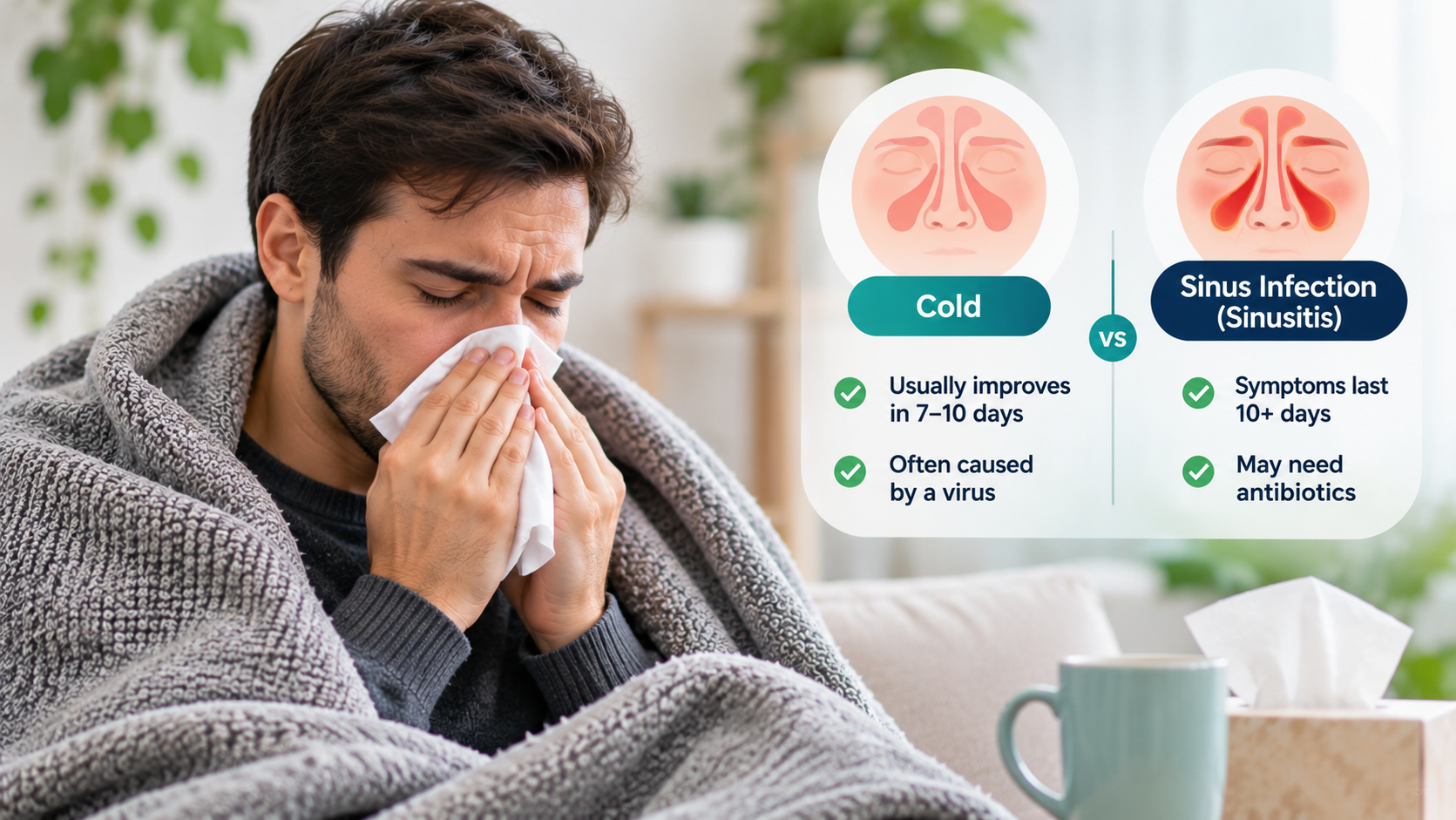
A common cold and a sinus infection can cause similar symptoms, but there are some differences worth understanding.
Common Cold
- Main symptoms: Runny nose, sneezing, and sore throat.
- Timeline: Symptoms usually improve within 7–10 days.
- Sense of smell: Usually normal, although temporary changes may occur with congestion.
- Tooth or ear pain: Less common.
Sinus Infection (Sinusitis)
- Main symptoms: Facial pain or pressure, nasal congestion, and thick nasal discharge.
- Timeline: May develop after a cold and can last longer.
- Sense of smell: Often reduced.
- Tooth or ear pain: Upper tooth discomfort or ear pressure may occur.
Although these symptoms can help identify possible sinusitis, a healthcare provider may need to evaluate your symptoms and medical history to determine the cause.
Signs It May Be Bacterial
Most sinus infections are caused by viruses and improve without antibiotics.
Clinical guidelines suggest a bacterial sinus infection is more likely when symptoms follow one of these patterns:
- Persistent symptoms: Nasal congestion, discharge, or facial discomfort lasting 10 days or longer without improvement.
- Severe symptoms: A fever of 102°F (39°C) or higher, accompanied by thick nasal discharge or facial pain for at least three to four consecutive days at the beginning of the illness.
- Double-worsening: Symptoms initially improve after a cold but suddenly worsen again, sometimes with a new fever, increased congestion, or more nasal discharge.
Even when bacterial sinusitis is suspected, some uncomplicated cases may be monitored before antibiotics are prescribed.
Your healthcare provider can discuss whether observation, supportive care, or antibiotic treatment is appropriate.
What Helps at Home
Several home-care measures may help relieve sinus pressure, congestion, and discomfort.
- Saline nasal rinses: Help clear mucus and improve nasal comfort. Always use distilled, sterile, or previously boiled and cooled water.
- Nasal steroid sprays: May help reduce inflammation and swelling inside the nasal passages.
- Pain relievers: Acetaminophen or ibuprofen may help relieve discomfort when used according to label instructions.
- Warm compresses: Applying a warm compress over the face may provide temporary relief from sinus pressure.
- Steamy showers: Warm, moist air may help ease congestion.
- Fluids and rest: Staying hydrated and getting adequate rest support recovery.
- Limit decongestant nasal sprays: Avoid using these sprays for more than three consecutive days unless directed by a healthcare provider, as prolonged use may cause rebound congestion.
If symptoms persist or worsen despite home care, consider scheduling a medical evaluation.
Go to the ER For
Although uncommon, sinus infections can sometimes lead to serious complications.
Seek emergency medical attention if you experience:
- Swelling or redness around the eyes.
- Double vision or other vision changes.
- A severe headache accompanied by a stiff neck.
- Confusion or changes in mental alertness.
- A persistent high fever accompanied by severe or worsening symptoms.
These symptoms may indicate a serious infection requiring immediate medical care.
When Recurring Sinus Problems Need a Closer Look
If you experience four or more sinus infections in a year, or symptoms that continue for 12 weeks or longer, you may have recurrent or chronic sinusitis.
Other possible contributing factors include allergies, nasal inflammation, or structural issues affecting sinus drainage.
A healthcare provider can review your symptoms, evaluate possible causes, recommend appropriate treatment, and refer you to an ear, nose, and throat (ENT) specialist when needed.
Frequently Asked Questions
Does green mucus mean I need antibiotics?
No. Green or yellow mucus does not automatically indicate a bacterial infection. Mucus color can change during a normal viral illness.
How long is a sinus infection contagious?
The respiratory virus that causes a cold or viral sinus infection can spread to others, particularly during the first several days of illness. Bacterial sinusitis itself is not typically transmitted directly from person to person.
Can I be treated by telemedicine?
Yes, many sinus symptoms can be evaluated through a telemedicine consultation. However, persistent, severe, or unusual symptoms may require an in-person examination.
Get Relief in Cumming
Still experiencing sinus pressure, nasal congestion, or discomfort after a week or more?
Aspire Medical Group provides primary care and acute illness services for patients in Cumming, Georgia, and surrounding communities.
Visit Aspire Medical Group to learn more about available services or call (770) 764-1234 to request an appointment.
This article is for educational purposes and does not replace professional medical advice, diagnosis, or treatment.